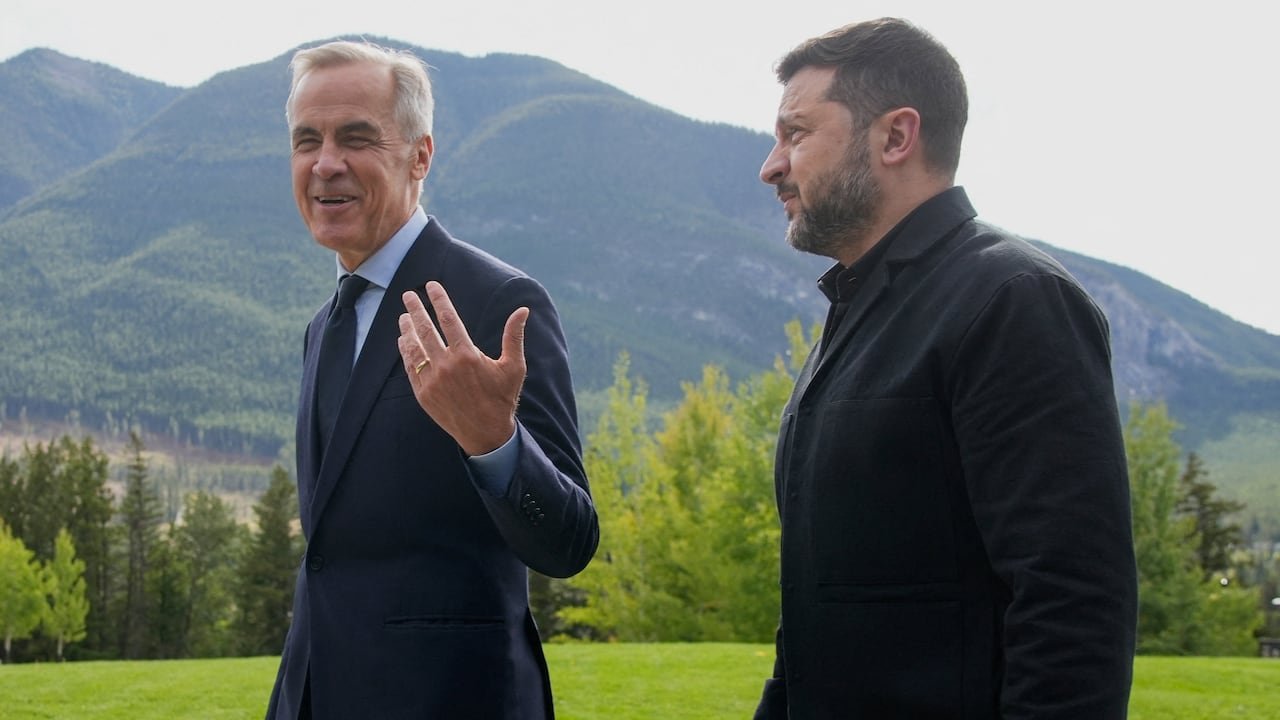
Volodymyr Zelenskyy framed Canada’s faltering ties with the United States as a dangerous trend, using Ukraine as a cautionary example to illustrate how powerful neighbors can redraw the political and economic landscape. The remarks, described as a pointed comparison, come as Ottawa faces questions about sovereignty and economic leverage in the shadow of a shifting geopolitical order.
The Ukrainian president’s assessment centers on the idea that relationships with large neighbors can become strained when economic coercion and strategic pressures intensify. While he acknowledged that Canada’s situation is not identical to Ukraine’s, he argued that the core dynamic—external powers influencing national policy—has become increasingly relevant to Canadian decision-making. The implication, though not a direct accusation, is that proximity to a dominant neighbour can test a country’s autonomy.
Details in Zelenskyy’s comments emphasize a broader, unsettled reality: nations must navigate scenarios in which external interests challenge domestic choices. The discourse touches on sovereignty and the resilience required to maintain independent policy amid regional power plays. The comparison, the president notes, is imperfect, but he suggested it is a trend worth watching closely.
Observers have noted that the debate intersects with Canada’s ongoing engagement with its allies, as well as with its own strategic assessments on economic partnerships, defense commitments, and national security. The discourse also reflects broader concerns about how sanctions, trade policy, and security guarantees shape a country’s room to maneuver.
In the end, Zelenskyy’s critique foregrounds a crisis of political and economic autonomy that Ukraine has lived through and that Canada is now confronting in a different context. The exchange underscores a shared anxiety about how major powers may influence national rules, sovereignty, and the ability to chart an independent course.