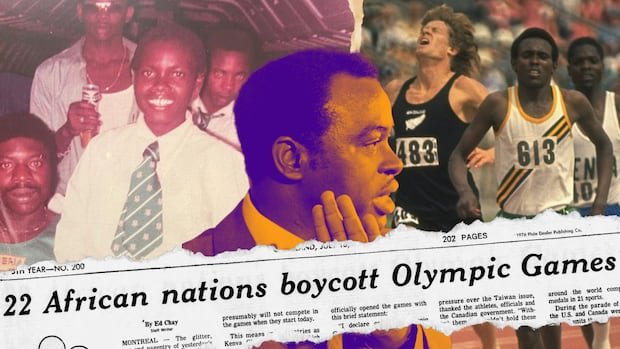
The report centers on athletes who prepared for Montreal but ultimately did not participate as part of organized withdrawals from several African and Caribbean nations. Nigeria is highlighted through images and testimony, including the moment when Major General Olufemi Olutoye announced his country’s withdrawal. The coverage also touches on the broader context of countries that supported the boycott as a protest over apartheid and colonial histories, while others expressed solidarity with those withholding participation as a political statement.
Among the narratives is the experience of a Nigerian woman who traveled to Montreal filled with hope for her Olympic debut, capturing the personal hopes and pressures faced by athletes who found their ambitions redirected by political action. In contrast, a Tanzanian track star is described as never making the journey, illustrating how the boycott altered individual athletic paths and altered the makeup of the Games itself.
The retrospective piece emphasizes how the decision to boycott was framed as a moral stance, with participants weighing the prestige and dreams of Olympic competition against the global duty to address social injustices. For some athletes and nations, the boycott became a defining moment in their careers and in the relationship between sport and politics.
As Montreal’s Games approach their 50th anniversary, the reporting revisits the complex motivations behind those withdrawals and the lasting impact on athletes who trained for years to compete at the world’s premier sporting event. The story highlights both the personal dimensions of the athletes’ decisions and the broader geopolitical implications that reverberate in Olympic history.