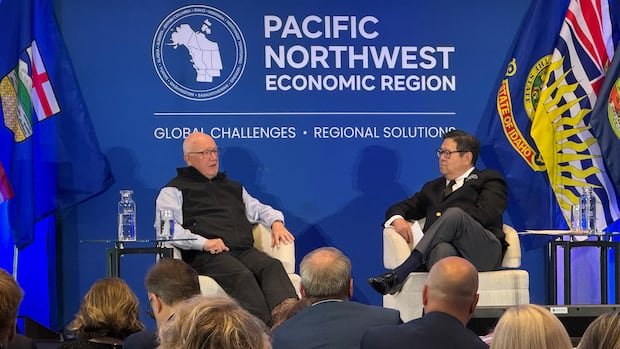
Hoekstra cited a need for three to four million additional barrels per day of oil in the United States over the next decade. He suggested that Canadian production, particularly from Alberta and Saskatchewan, could be a strong contributor to filling that gap. The ambassador did not outline specific policy steps but emphasized the strategic value of diversifying supply sources to bolster energy security.
The remarks come amid a broader discussion of energy supply, infrastructure, and cross-border markets within the regional summit, which gathers leaders and executives from Western Canada and the U.S. Pacific Northwest. Hoekstra’s comments align with ongoing industry narratives that view Canadian oil as a reliable option for American refiners facing demand growth and supply disruptions elsewhere.
During the event, Hoekstra was pictured in conversation with Gary Mar, president and CEO of the Canada West Foundation, at a session centered on energy and economic ties. The gathering highlighted regional cooperation as a factor in shaping North American energy policy, though no new agreements were announced at the summit.
Analysts noted that while Canada remains a major oil producer, policy, pipeline capacity, and market access continue to influence how quickly U.S. imports could rise. Edmonton residents and regional business leaders attending the summit emphasized the importance of stable energy relationships and infrastructure investment to support future oil sales.
Hoekstra did not provide a timeline for when the proposed increase in U.S. imports might materialize, instead framing Canada’s potential contribution as a long-term component of meeting American demand. He underscored the mutual benefits of a robust North American energy partnership, while stressing the need for continued collaboration on policy and project development to realize the projections.