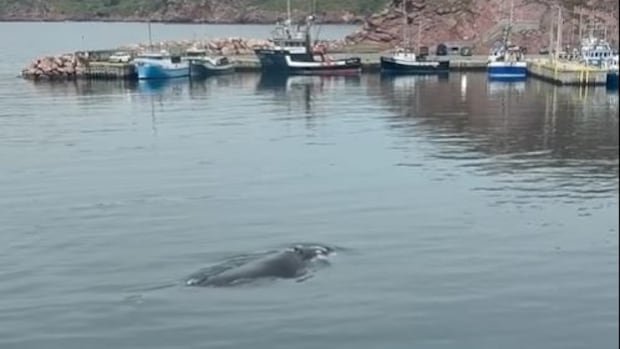
In Bay de Verde, a small community in Newfoundland’s Conception Bay, a rare sight unfolded earlier this month when a North Atlantic right whale was spotted just outside the window of a local office. The encounter occurred in plain view of Kristinn Skulason, who captured video footage of the whale as it moved close to shore. Skulason shared that the whale lingered briefly in the vicinity before continuing on its offshore course.
The North Atlantic right whale is among the most endangered large whale species in the world, with an estimated global population of about 380 individuals. Conservation groups consider sightings that occur near coastal towns to be notable, given the species’ limited numbers and the ongoing threats it faces from ship strikes, entanglement in fishing gear, and habitat loss. While the exact location and times of such encounters can be fleeting, they often serve as reminders of the species’ fragile status and the importance of routine maritime safety awareness in coastal communities.
Experts say that sightings near populated areas, even if brief, can provide valuable information about whale movements and habitat use. The Newfoundland region is part of the species’ range, though the whales typically spend time along the eastern seaboard of North America and migrate seasonally. Local authorities and researchers encourage maritime operators to maintain vigilance to reduce risk to both whales and people.
There was no report of any injuries or ship strikes tied to this particular sighting. Observers noted the whale appeared to be swimming near the surface in relatively calm conditions during the moment captured on video. Wildlife groups reaffirm their call for ongoing monitoring and reporting of such sightings to improve understanding of right whale movements and to support conservation measures for this critically endangered population.