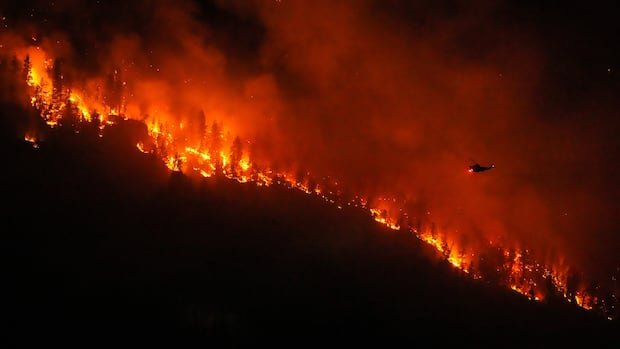
The B.C. Wildfire Service reported multiple active fires in the interior of the province, including a blaze near Okanagan Lake that has drawn heavy air support. Images accompanying the service’s updates show helicopters and water-dropping aircraft in operation as crews work to contain the spread of flames across rugged terrain.
Emergency management officials emphasized that visibility and access for firefighting aviation must be prioritized to sustain suppression efforts. In addition to water collection operations, ground crews are engaged in structure protection, fuel break creation, and rapid response to shifting fire fronts driven by gusty winds and heat.
Residents and visitors in affected areas were reminded to follow official advisories, maintain clear evacuation routes, and avoid nonessential travel through fire-affected corridors. Authorities cautioned that conditions could deteriorate quickly with the combination of high temperatures, low humidity, and dry lightning threats, potentially leading to rapid fire growth.
Officials did not specify the total number of active fires or exact containment figures in this update, but stressed that the situation remains volatile and continues to require both vigilant monitoring and coordinated firefighting strategy. The public was urged to stay informed through provincial updates and to report new fires promptly.
The situation highlights ongoing challenges during what forecasters describe as a period of heightened fire risk across the province, where nearby fires can quickly intensify and demand sustained air and ground response efforts to protect communities and critical infrastructure.