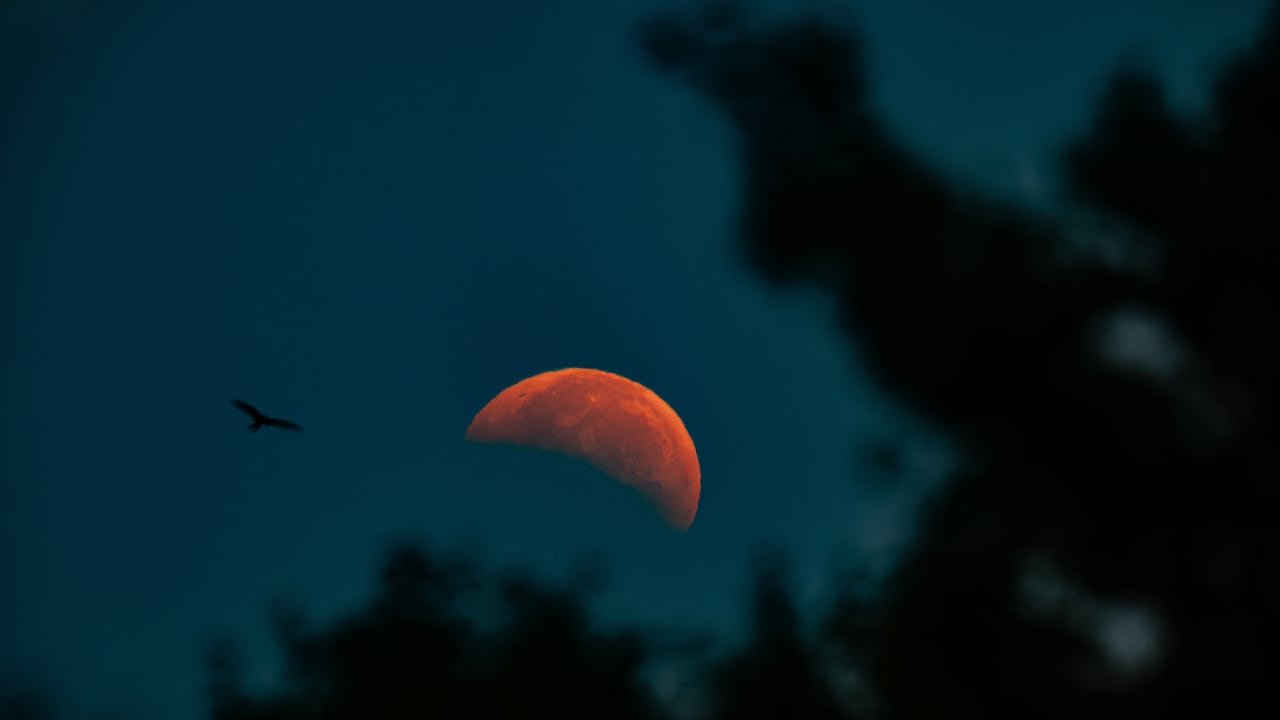
Skywatchers in the Americas, Europe and Africa lined up a simultaneously viewable celestial show as a partial lunar eclipse unfolded from Thursday evening into Friday. The phenomenon altered the Moon’s appearance as it moved through Earth’s shadow, delivering a reddish hue to parts of the lunar disk in the captured images.
The event drew attention with photographs showing the Moon partially dimmed and tinted, offering a vivid reminder of how celestial shadows can reshape what observers see in the night sky. The imagery highlights the eclipse’s reach across multiple regions, with observers reporting visibility in various locales within the broad arc of its path.
Across the Americas, Europe and Africa, enthusiasts were able to witness the moment when the lunar surface entered Earth’s shadow, creating a partial eclipse rather than a full one. The photographs accompanying the coverage depict the Moon in different stages of the shading, emphasizing the variation in visibility and color among observers.
The report notes the timing extended from Thursday night into Friday, allowing late-evening and early-morning views in different time zones. The event’s reach and the shared viewing experience across continents underscore the global interest in minor, yet striking, astronomical alignments.
Officials and scientists often use such events to illustrate the mechanics of lunar orbits and Earth’s shadow, though the coverage here focuses on the observational aspect—what skywatchers could see with the naked eye or through basic viewing equipment. The striking images serve as a visual record of the partial eclipse as observed from distinct regions, capturing the transient changes in the Moon’s appearance.
In sum, the partial lunar eclipse provided a global viewing moment, with photographs capturing the Moon’s altered disk and the collective experience of spectators across three continents during a single celestial event.