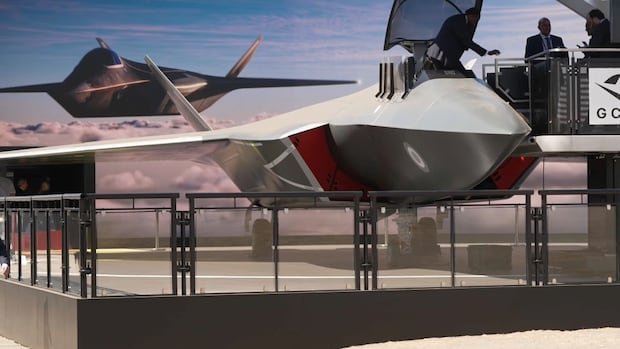
Ottawa, Canada — The Canadian government has signed an agreement to participate as an observer in the Global Combat Air Programme (GCAP), a multinational effort led by the United Kingdom, Italy and Japan to develop a sixth-generation stealth fighter jet intended for entry into service around 2035.
The move positions Canada at the perimeter of the consortium while allowing Ottawa to engage with partner nations on research, technology, and policy aspects of the project. The announcement was confirmed by Canada’s government and followed discussions with partner states involved in GCAP.
Officials emphasized that the arrangement is non-binding and does not commit Canada to production purchases or funding beyond what is typical for observer status in large international defense initiatives. The arrangement enables Canadian participation in technical exchanges, capabilities assessments, and governance considerations as the project progresses toward a final design and demonstration milestones.
In remarks to CBC News, the commander of the Royal Canadian Air Force suggested that Canada’s involvement could evolve toward deeper collaboration. He indicated it is feasible to imagine a scenario in which Canada becomes a full partner and, potentially, a buyer of the new aircraft in the future, contingent on strategic and budgetary considerations.
GCAP aims to deliver a next-generation stealth fighter by the mid-2030s, with the participating countries pursuing common design features, integrated avionics, and advanced propulsion; core goals include interoperability, cost-sharing, and maintaining technological leadership in air combat capabilities.
Canada’s move follows a broader pattern of allied nations contributing to and observing major defense technology programs, balancing national defense priorities with broader security and industrial interests. Details on specific timelines, funding commitments, or industrial participation for Canada as an observer were not disclosed.