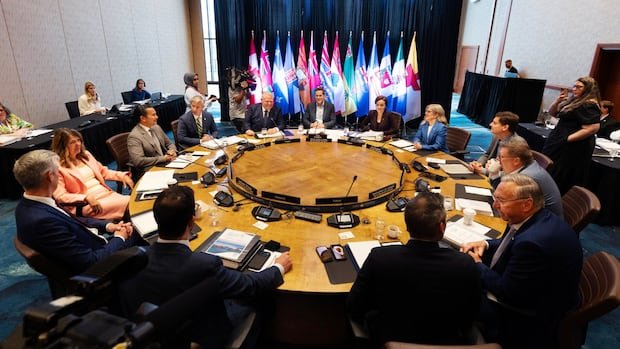
Charlottetown, P.E.I. — The country’s premiers gathered in Charlottetown for a scheduled briefing, but the session quickly pivoted as a fresh U.S. tariff threat loomed over the discussion. The leaders held a news conference following their discussions, where the topic of American trade measures overshadowed other items on the agenda.
Officials did not disclose detailed outcomes of the talks, but premiers emphasized the need to respond cohesively to any tariff actions that could impact provincial economies. The press briefing occurred after the group met to deliberate on shared economic concerns, regional challenges, and collaborative policy responses, with the tariff issue framed as a potential obstacle to Canada’s trade and manufacturing sectors.
Observers noted that the American tariff threat marked a notable turn in the gathering, signaling intensifying scrutiny of cross-border commerce and the potential for renewed negotiations with Washington. While the premiers did not announce specific policy moves, they underscored the importance of maintaining open channels with U.S. counterparts and building a united front among provincial governments.
Premier after premier took the podium to reaffirm the province-led approach to competing in a closely integrated North American economy. Several leaders highlighted the need to protect jobs, diversify export markets, and support local industries facing uncertainty from any forthcoming U.S. measures. The press conference also touched on priorities such as energy, construction, and consumer goods sectors that could be affected by tariffs.
Analysts stated that the timing of the tariff threat places extra pressure on a Trudeau administration already navigating complex trade dynamics. While the premiers did not declare a formal agreement or policy directive at the briefing, they signaled a continued, coordinated stance on trade and economic resilience in the face of external pressures.
The event concluded without new announcements, but the tone suggested a persistent focus on collective regional resilience and the readiness to engage with federal authorities to address potential tariff-related disruptions. Further updates are expected as negotiations and policy responses unfold.