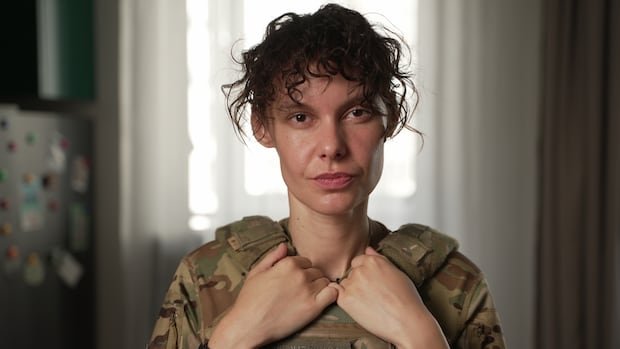
On the front lines of Ukraine’s war with Russia, female soldiers are evaluating a new line of body armor designed specifically to fit women, offering an alternative to standard gear built for male frames. The initiative is led by a Canadian company whose protective plates aim to improve mobility, comfort, and protection for women in combat roles.
A frontline officer of the National Guard, who uses the call sign “Kudriava,” described her experience with the existing equipment. She said she had long relied on body armor originally issued for men and, over time, had purchased additional gear to achieve a more secure fit. Her account illustrates a broader issue: ill-fitting armor can hinder movement and effectiveness in high-stress situations, while better-fitting gear could enhance safety and performance.
The Canadian-designed armor being tested is marketed as a gender-specific option, addressing variations in body shape and silhouette that standard plates may not accommodate. Test participants include female soldiers who have spent months in active-duty environments, giving feedback on weight distribution, shoulder mobility, and the ease of donning and doffing protective equipment under combat conditions.
Military officials overseeing the field trials emphasized the importance of providing equipment that does not compromise protection for the sake of fit. They noted that improved ergonomics can reduce fatigue and increase endurance during extended patrols or engagements.
Experts familiar with battlefield equipment assessments say such tests are part of a broader push to customize military gear to diverse body types without sacrificing safety standards. They point to ongoing efforts globally to address ecological validity in protective equipment, ensuring that armor performs consistently across different sizes and shapes.
The testing phase is expected to inform procurement decisions and potential scale-up if the gear meets performance benchmarks. No timetable was provided for when the new armor might become standard issue, but officials indicated that user feedback from women on the front lines is central to the evaluation.