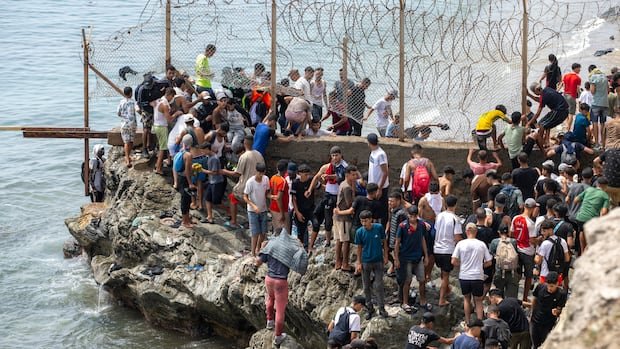
Photos and reports from the border area show hundreds of people attempting to cross from Fnideq, a Moroccan town, into Ceuta, amid high-saturation border activity. The incident has underscored longstanding tensions over irregular migration routes into the EU and the challenges of managing porous borders in the region.
EU officials indicated the emergency session will review current border protections and consider additional measures to prevent large-scale crossings. The member states’ letter called for reaffirmation of border surveillance, reinforced cooperation with Spain, and a broader EU strategy to address both the immediate situation at Ceuta and underlying drivers of migration.
Spain’s authorities have been dealing with the fallout from the crossings, which occurred near the city’s waterfront area where barriers and fencing are in place. As Ceuta sits on the North African coast opposite the Moroccan town of Fnideq, it has long been a flashpoint for migrants seeking to enter the EU, often aiming for the European mainland via irregular routes.
EU officials stressed the need for a coordinated, humane response that also safeguards internal security and asylum processes. The emergency meeting will explore policy options, potential funding for border management, and mechanisms to share information and resources among member states.
There was no immediate confirmation of casualties or injuries in the latest crossings, but authorities warned that such attempts can be dangerous and frequently involve crowds converging at narrow border points. The meeting marks a high-level EU effort to align responses to recurring crossings and the political pressure to demonstrate effective border governance.