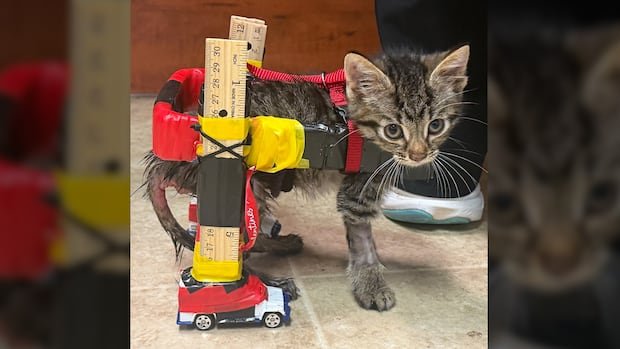
Mallory Smith, the veterinary worker fostering Gelato, repurposed everyday materials to construct a functional wheelchair. Her makeshift design uses a cardboard frame reinforced with duct tape in red, yellow, and black, with wooden rulers serving as legs. The setup includes a red harness attached to the frame, enabling Gelato to move more freely while he recovers.
The improvised wheelchair reflects a broader trend of caregivers adapting equipment to fit the specific needs of small or unusually sized pets. Shelter staff noted that Gelato’s tiny stature posed a challenge for commercially produced devices, but the creative solution allowed him to begin rehabilitation and maintain mobility during recovery.
Details about Gelato’s diagnosis or prognosis were not disclosed, but the focus remained on the positive impact of mobility aid in fostering care. The shelter plans to monitor Gelato’s progress as he adjusts to the device and to explore additional accommodations if needed.
Experts in veterinary rehabilitation have long advocated for early, appropriate mobility support for injured animals to prevent muscle atrophy and encourage proper healing. While Gelato’s wheelchair may be a temporary measure, it illustrates the potential for low-cost, customized solutions to address pet mobility gaps when standard equipment is unsuitable.
Shelter officials emphasized that ongoing veterinary oversight will guide Gelato’s treatment plan. If Gelato responds well to the improvised wheelchair, he may soon participate in regular activities as part of his recovery process, with plans to reassess his equipment as his needs evolve.