Details released by researchers indicate that debris from the second stage of the Falcon 9 rocket re-entered the lunar environment and created a detectable plume upon impact. The incident aligns with prior predictions from a team of scientists who modeled the craft’s drift and identified a high likelihood of a collision with the lunar surface.
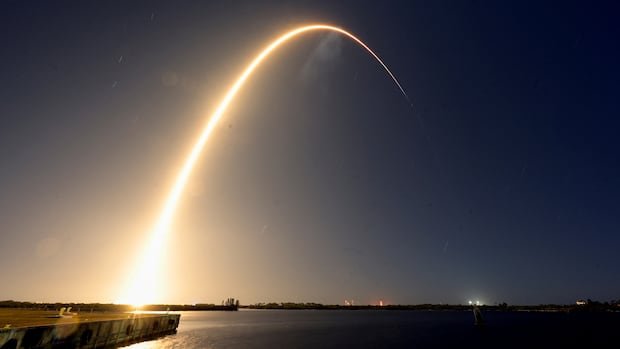
The launch, which involved two lunar landers, occurred at Kennedy Space Center in Cape Canaveral, Florida, and took place earlier this year. According to the report, the second stage of the rocket continued on an altered course for an extended period before finalizing its impact on the moon. Observations of the disturbance on the lunar surface were reported after the event, with researchers confirming a debris field consistent with a controlled impact scenario rather than an unexpected crash.
Officials from the observing team described the plume as a telling sign of material release during impact. While the collision was predicted, the confirmation of an actual hit provides a concrete data point for future missions involving spent rocket stages and lunar hardware.
SpaceX has not issued a formal statement detailing the debris plume or the final impact location, but the findings from independent scientists corroborate the trajectory analysis that led to the conclusion of a lunar impact. The event adds to ongoing discussions within spaceflight communities about end-of-life disposal strategies for upper-stage boosters and the management of secondary payloads deployed during lunar missions.
Further analysis is expected as researchers examine imaging and spectral data collected from Earth-based and space-based observatories. The incident underscores the complexities of tracking spent launch hardware over interplanetary distances and the importance of predictive modeling in verifying mission outcomes.