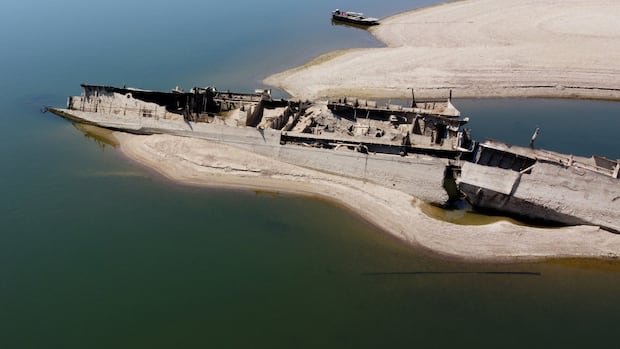
The vessels lie in the riverbed near Djerdap II, the large dam on the Danube between Romania and Serbia, close to the town of Prahovo in Serbia. As rivers shrink under extreme heat, sediment and riverbanks retreat, revealing remains that had long been submerged. The resurfacing ships—scuttled by German forces in the Danube during the conflict—have drawn attention for their historical significance and the stark conditions of the current drought.
Experts note that low water levels in the Danube, a critical European waterway, are part of a broader pattern of climate-driven stress affecting waterways across the region. The visible wrecks serve as a visible reminder of the war’s long-tail effects, intersecting with contemporary concerns about water security, navigation, and environmental management.
Officials and historians caution against misidentifying or disturbing the sites, which may include military artifacts and remnants. Local authorities have emphasized safety and the need to preserve historical material while ensuring that reduced river traffic and altered shipping conditions are managed effectively.
The discovery follows a season of unusually high temperatures and low precipitation across parts of Europe, conditions that have driven rivers to record low levels in several watersheds. The Danube, already a major commercial artery, has faced reduced depth and flow in places, complicating shipping, hydroelectric operation, and flood control planning.
As observers document the receding waters, researchers intend to catalog findings at the sites and monitor any ongoing exposure of sunken equipment. The episodes highlight the enduring legacies of historical conflicts and the immediate pressures posed by a warming climate on Europe’s rivers.