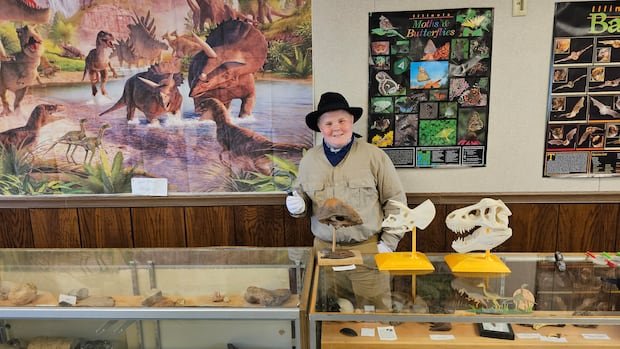
According to reports, Taylor began his fossil-hunting pursuits early, building up a sizable personal collection before deciding to share his finds with the community. The museum, which now serves as a venue for visitors to view his specimens, reflects a persistent interest in paleontology that has driven the young collector since childhood.
The Cambridge Natural Museum features display cases that house a variety of fossils, offering educational insight into prehistoric life. Photos accompanying coverage show Taylor standing behind the museum’s displays, wearing a hat and gloves, as he oversees the exhibits. The setup appears designed to engage visitors and provide an accessible look at the material the 11-year-old has gathered over the years.
Local sources emphasize the educational role of the museum, noting that it provides a tangible glimpse into paleontological exploration for residents and visitors alike. While many traditional museums rely on professional curators and extensive funding, Taylor’s project underscores how individual passion can create learning opportunities outside of larger institutions.
Officials and community members have expressed support for the initiative, highlighting its potential to inspire other young people to pursue science and history through hands-on exploration. The museum operates with a focus on outreach and education, inviting the public to learn about fossil discovery, preservation, and the process of assembling a collection from found specimens.
No details regarding the museum’s funding, governance, or long-term plans were provided in the available materials. Nevertheless, Taylor’s achievement demonstrates how a sustained hobby can evolve into a community resource and a platform for early scientific engagement. As he continues to amass fossils and knowledge, the Cambridge Natural Museum stands as a notable example of youth-driven cultural and educational projects.