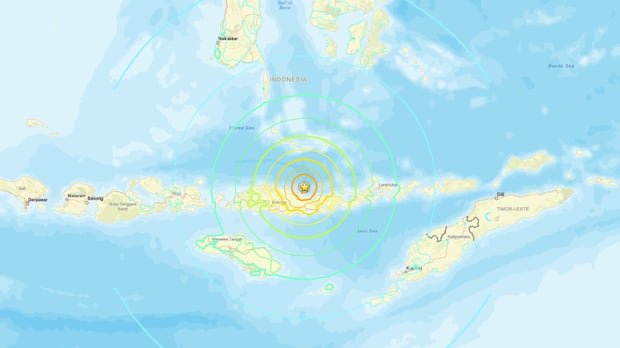
Initial reports indicate there were no immediate casualties or damage attributed to the earthquake, and no tsunami has been confirmed at this time. Disaster response officials and monitoring agencies are continuing to assess the situation and determine any potential threat to nearby populations and infrastructure.
The quake struck offshore, away from major urban centers, which may have contributed to the absence of reported injuries or destruction in the immediate aftermath. Seismic activity of this strength in maritime areas often triggers tsunami advisories as a precaution while more detailed evaluations are conducted.
Emergency management agencies in Indonesia and neighboring countries are coordinating to monitor sea levels and tide conditions. Authorities urged residents in coastal zones to stay away from beaches and heed official warnings as monitoring continues and forecasts are updated.
Experts note that while a magnitude 7.7 quake can release substantial energy, the resulting tsunami risk depends on factors such as the depth of the quake, its underwater location, and the direction of tectonic movement. Officials emphasized that the situation remains under review and that advisory statuses could change as new data becomes available.
Regional port authorities and maritime operators were advised to monitor sea conditions closely and prepare for potential disruptions to shipping or coastal activities if a tsunami threat persists. Local media were advised to disseminate warnings promptly to communities along the Indonesian archipelago and nearby coastlines.
Authorities continue to balance caution with the need to avoid unnecessary alarm. Updates are expected from the U.S. Geological Survey and Indonesian disaster response agencies as more information becomes available on the earthquake’s magnitude, aftershocks, and any subsequent tsunami advisories or warnings.