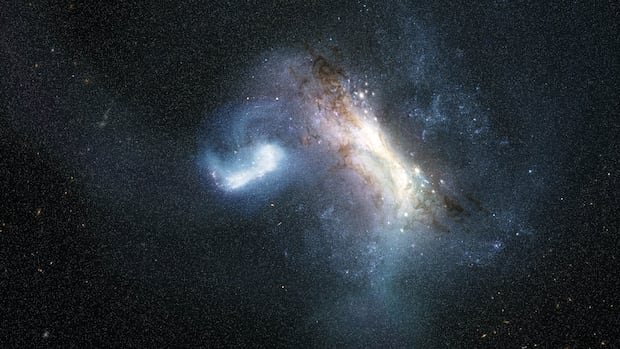
Scientists studying star clusters near the Milky Way’s center have found evidence that our galaxy consumed a smaller galaxy about 11.8 billion years ago, when the universe was less than 15 percent of its current age. The discovery points to a past galactic swallowing that shaped the structure of our home galaxy.
The finding centers on globular star clusters observed in the Milky Way’s core. Researchers interpret these clusters as clues indicating a past merger, where a dwarf galaxy collided with and merged into the Milky Way. This event is dated to roughly 11.8 billion years ago, providing a timestamp for a formative chapter in our galactic history.
The report emphasizes that the analysis uses star clusters as forensic evidence, suggesting that a smaller galaxy was absorbed long ago as the Milky Way grew. The timeline places the event at a time when the universe was considerably younger, offering context for the Milky Way’s current composition and structure.
No additional details about the larger galaxy or the precise mechanisms of the merger are provided in the available summary. The reporting highlights the significance of these globular clusters in revealing ancient galactic interactions that contributed to shaping the Milky Way’s evolution.