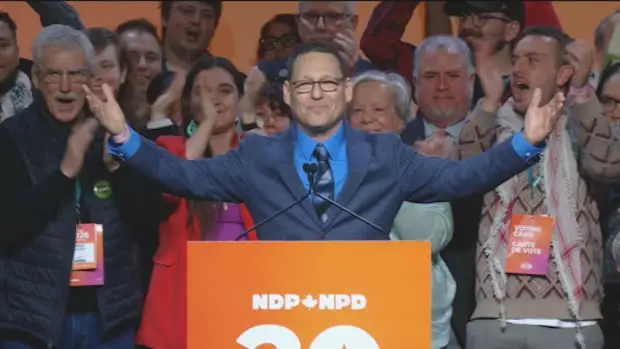
Avi Lewis reached a significant milestone last week, surpassing 100 days since taking the helm of the New Democratic Party. While the period has offered a visible test of leadership, observers and party members alike are evaluating whether his tenure has shifted the NDP’s public profile, electoral prospects, and policy influence in Ottawa and across the provinces.
Leadership changes often come with a flurry of activity aimed at signaling direction, but translating that into sustained political momentum can take longer. In Lewis’s case, the early weeks included outlining priorities and engaging with party members, while the broader political environment continued to tilt toward issues such as affordability, healthcare, and climate policy—issues the NDP has historically sought to leverage against the governing party.
Analysts note that the party’s ability to expand its reach hinges not only on messaging but on electoral viability in key battlegrounds. The NDP has historically faced the challenge of differentiating its platform from those of the Liberals and the Bloc Québécois in various regions, particularly in provinces where local dynamics influence voter allegiance. As Lewis began his tenure, party strategists emphasized a focus on social programs, workers’ rights, and a pragmatic approach to governance that could appeal to both traditional NDP supporters and left-leaning swing voters.
Within the party, support for Lewis’s leadership has been mixed in certain regions, reflecting diverse constituencies and long-standing party structures. Some members have praised his emphasis on Grassroots engagement and policy depth, while others have urged a clear pathway to electoral competitiveness and a more defined stance on national issues. The leadership period’s early phase has included internal discussions about how aggressively the party should press the government on specific bills and budgets, as well as how to best position the NDP in a crowded federal political field.
Opposition figures and political observers have framed Lewis’s leadership as a test of the NDP’s capacity to capitalize on any perceived governance gaps. The party’s approach to negotiating confidence-and-supply arrangements or cooperation on parliamentary priorities continues to be a live topic among strategists, though there has been no public indication of a formal shift in coalition-style tactics at this stage.
Lewis’s personal profile has become a focal point in media coverage, with questions about his ability to connect with diverse constituencies and to articulate a distinct alternative to the policies of the governing party. At the same time, the NDP remains engaged in ground campaigns in several ridings and has sought to maintain a steady stream of policy proposals and issue-focused messaging that can be leveraged in ongoing political debates.
For voters and party members, the central question remains whether 100 days is a sufficient barometer of effectiveness. Political timelines, particularly in federal politics, often reveal whether leadership translates into durable electoral momentum only after extended campaigns and the emergence of clear policy breakthroughs. Lewis’s next phase will likely involve sharpening policy messaging, building candidate pipelines in key regions, and presenting a coherent plan for how the NDP would govern or influence governance if given greater parliamentary influence.
As the calendar moves forward, the party’s leadership will continue to grapple with balancing principled policy positions and practical governance considerations. The 100-day mark provides a snapshot, but not a verdict, on Avi Lewis’s ability to move the NDP needle in a federal landscape that remains highly competitive and issue-driven.