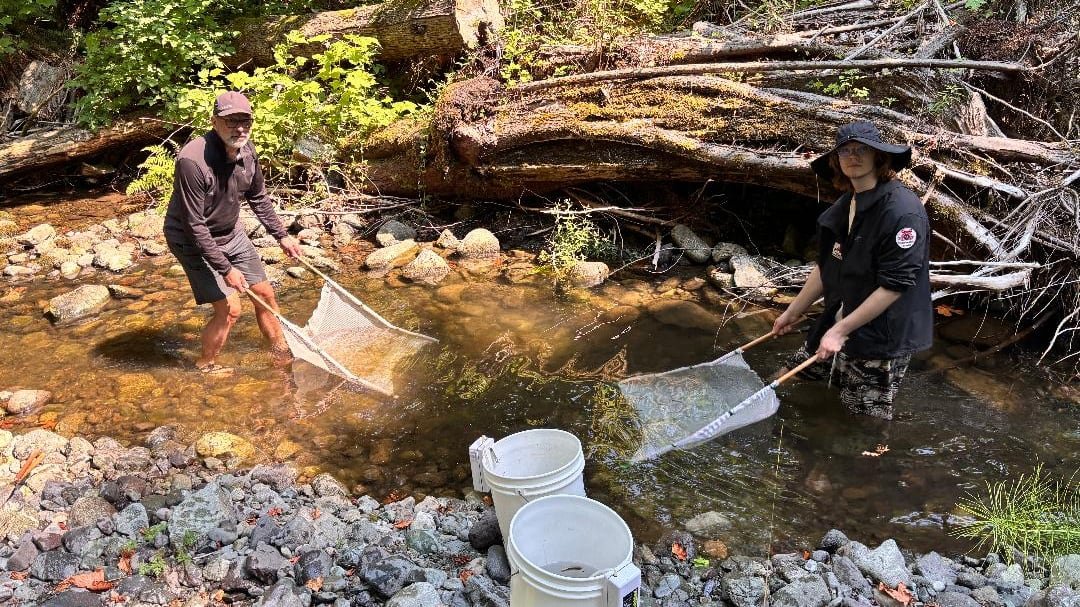
As British Columbia faces an intense drought, volunteers are stepping in to save salmon and other fish by moving them from shrinking streams to deeper water. The effort comes as scientists warn that heat and dwindling waterways are making rescue work more difficult to sustain.
The process focuses on capturing stranded fish and relocating them to safer habitats, with volunteers using nets and careful handling to transport the fish. The operation has been visible in areas like Ashburnham Creek in Honeymoon Bay, where local volunteers and students have participated in the rescue.
The image accompanying the report highlights participants engaging in the effort, including a Lake Cowichan High School student and a volunteer from Cobble Hill, who demonstrate the hands-on approach of the rescue. The broader concern cited by scientists centers on the increasing challenges posed by shrinking streams and escalating temperatures, which threaten the viability of ongoing relief efforts.
Officials have noted that drought conditions are directly impacting freshwater ecosystems, prompting a rapid-response volunteer network to intervene. While rescues can provide immediate relief for fish populations, experts caution that the longer-term sustainability of such efforts depends on addressing the underlying drought conditions and heat.
The story underscores a community-wide response to a regional environmental stressor, with volunteers providing critical support as researchers monitor the broader ecological implications of drying rivers and warming waters. This ongoing situation illustrates the delicate balance between immediate rescue actions and the need for broader climate resilience in British Columbia’s freshwater systems.