Devyn McMillan, a rancher who previously endured the White Rock Lake Fire in 2021, faced a perilous situation as the Bradley Creek blaze advanced toward her property. She said she believed she was prepared for wildfire events, having evacuation plans and past experience guiding her actions. However, the new fire proved markedly different in its behavior and impact.
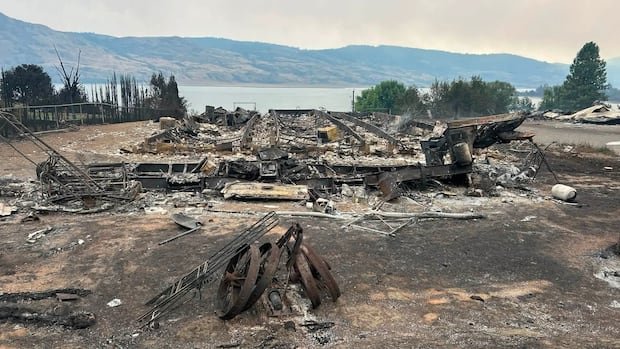
The fire’s approach created a scene of destruction around McMillan’s homestead. A photo accompanying local reporting shows charred rubble with a distant view of Okanagan Lake, illustrating the scope of the damage. Authorities have not yet disclosed specific containment milestones or total acreage, but residents describe the path of destruction as sweeping and intense.
McMillan’s experience underscores a broader pattern observed in recent wildfires, where fires move with unpredictable rapidity and intensity, often outpacing even well-practiced evacuation plans. Neighbors and local responders reportedly worked to protect structures and assist those forced to leave, though many homes and outbuildings in affected areas were not spared.
The Bradley Creek wildfire is part of a larger firefighting effort in British Columbia’s interior, where crews are contending with multiple outbreaks during a season characterized by dry conditions and strong winds. Local authorities have issued evacuation advisories and orders for various communities as firefighters pursue containment lines and attempt to safeguard remaining structures.
Residents are encouraged to stay informed through official channels for updates on evacuation status and fire behavior. The emotional toll of losing a residence, a workshop, and personal property is significant, prompting discussions about preparedness, insurance coverage, and the need for community resilience in the face of changing wildfire dynamics. Further updates from emergency management authorities are expected as crews continue to monitor and respond to the Bradley Creek incident.