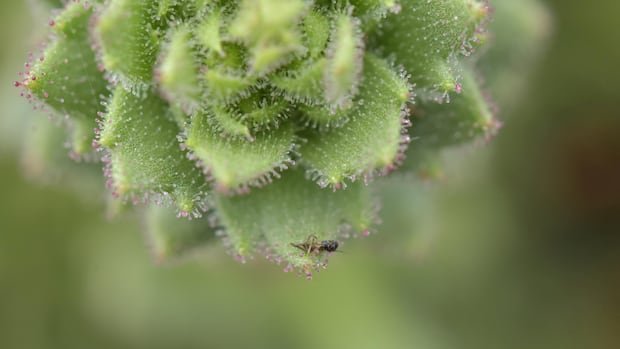
The study, conducted by a team of international scientists, identified specialized sticky hairs on the plant’s leaves that act as a trap for small insects. When prey becomes ensnared, the plant secretes enzymes and compounds that break down the victim, allowing the plant to absorb nutrients. This mechanism elevates the species from being categorized as a typical herbaceous plant to a carnivorous one, according to the researchers’ findings.
Field observations were carried out in the high-altitude regions of Yunnan, China, where the plant thrives among rugged terrain and sparse vegetation. The team documented multiple instances of insects becoming entrapped by the leaf structures and subsequently diminishing in size and vitality as a result of predation. They also noted that the plant’s growth rate and reproductive success appear linked to the availability of prey in its environment.
While carnivorous plants are not unprecedented globally, this particular species had remained on the periphery of scientific attention due to its understated appearance and remote habitat. The confirmation of its predatory behavior provides a tangible link to Darwin’s early evolutionary ideas about plant adaptations and nutrient acquisition in nutrient-poor soils.
Experts emphasize that, despite the dramatic label, the plant’s carnivory is a specialized survival strategy rather than a broader threat to humans or ecosystems. Researchers hope that understanding such mechanisms can shed light on evolutionary processes and plant ecology, while also underscoring the diversity of life adapted to extreme rocky habitats. Further studies are planned to explore the plant’s biochemical pathways and potential variations in predation across different environmental conditions.