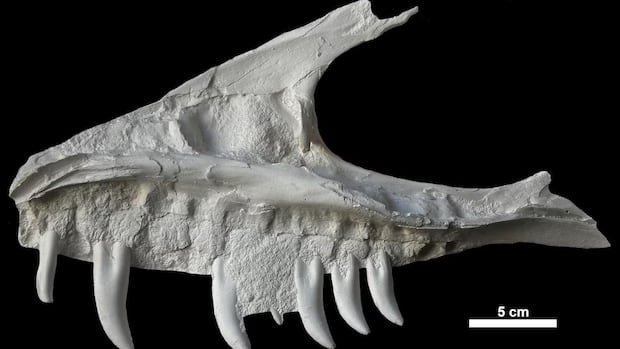
The fossil, discovered in a campground in British Columbia, has been reclassified as a close relative of Tyrannosaurus rex, described by the study authors as a “great-uncle” to the iconic predator. The researchers say the specimen represents a distinct lineage within Tyrannosauridae, sharing key features with T. rex but differing in its body proportions and presumed locomotion.
Photographs and casts of the skull impression—originally uncovered in a sandstone block in 2017 at Tumbler Ridge, B.C.—were analyzed by a team of paleontologists. The study’s authors emphasize that the skull’s morphology suggests a lighter frame and higher speed potential relative to T. rex, implying different predatory strategies and ecological roles during its era.
While the precise dating of the fossil remains is not detailed in the release, the researchers place the find within the broader tyrannosaur evolutionary timeline. They caution that further excavation and comparative analysis are needed to refine its placement within Tyrannosauridae and to understand its full functional anatomy.
The discovery underscores ongoing efforts to piece together the diversity of predatory dinosaurs in western North America during the Late Cretaceous period. It also highlights how reinterpretations of existing fossils can alter long-standing assumptions about well-known dinosaurs.
Experts unaffiliated with the study noted that classifying Tyrannosauridae members often reveals a spectrum of body sizes and speeds, influencing reconstructions of their behavior and ecosystems. The authors of the Alberta study say their work contributes to this broader understanding by detailing how this particular fossil differs from the classic T. rex while remaining part of the same family.
Researchers plan additional analysis and potential fieldwork to confirm characteristics of the skull and to explore its ecological implications within its ancient environment.