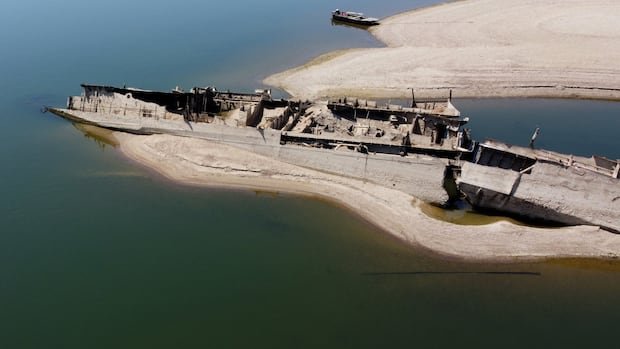
Experts say record-high temperatures and sustained droughts have driven water levels down on the Danube, uncovering warships that were scuttled or sunk during the Second World War. The rediscovered wrecks are visible along stretches of the Danube near Djerdap II, the large dam on the river that forms part of the border between Romania and Serbia, close to Prahovo, Serbia. Photographs depict rusted hulls half-buried in sand and sediment, with the surrounding river water receding to reveal the once submerged relics.
Local authorities and historians noted that the receding water exposes artifacts tied to wartime actions on the Danube, offering researchers a chance to examine vessels long thought lost to history. While the ships themselves are not reported to pose immediate safety concerns, experts emphasized that the scene underscores how extreme heat and drought can alter landscapes and uncover objects with historical significance.
Environmental observers have linked the broader pattern of weather to climate variability and climate change, pointing to a broader trend of rising temperatures across Europe since May. The heat has intensified through the summer in multiple countries, contributing to streams and river basins reaching critically low levels in several regions. This has had a range of effects, including agricultural stress, energy demand fluctuations, and elevated wildfire risk in some areas.
Officials cautioned residents and tourists to remain aware of weather advisories, water levels, and safety considerations when near riverbanks and exposed riverbeds where submerged features may surface. As heat persists, researchers plan to continue monitoring the Danube and other waterways for further changes in water levels and any additional historical remnants that emerge from receding waters.