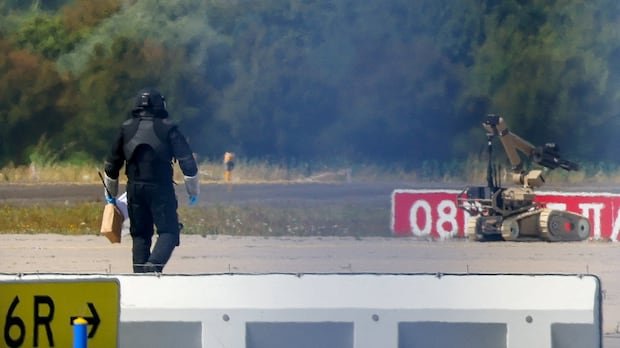
Chancellor Friedrich Merz convened a conference call Friday to review the episode and its ramifications, as German politicians weighed the potential implications for aviation security and national safety protocols. The clash between a suspected explosive device and airport operations led to immediate security responses, including the deployment of explosive-disarming equipment and on-site risk assessment by law enforcement and counterterrorism units.
Details released by prosecutors indicate the drone was found near the airport’s runway area, triggering a rapid investigation into the source and intent behind the device. Investigators have not yet identified a suspect or group, but the probe is being treated as a criminal matter with counterterrorism as a priority.
The incident drew attention due to the high-profile nature of the target and the potential for broader disruption across Germany’s air cargo network. Authorities highlighted that, despite the drone’s failure to explode, the event underscored vulnerabilities in aviation security infrastructure and the need for enhanced screening, detection, and response measures for unmanned aerial systems operating in proximity to critical transport hubs.
Leipzig/Halle Airport has not released a formal statement detailing security changes, but officials indicated ongoing collaboration with federal agencies to assess risk and strengthen protective measures. The German public and political leadership have called for coordinated action to prevent similar attempts and to reassure travelers and industry workers about safety procedures.
No injuries were reported in connection with the incident, and normal flight operations were reportedly resumed after the immediate threat was addressed. Investigators are expected to provide further updates as the counterterrorism inquiry progresses and as more forensic and technical analyses of the drone and surrounding circumstances are completed.