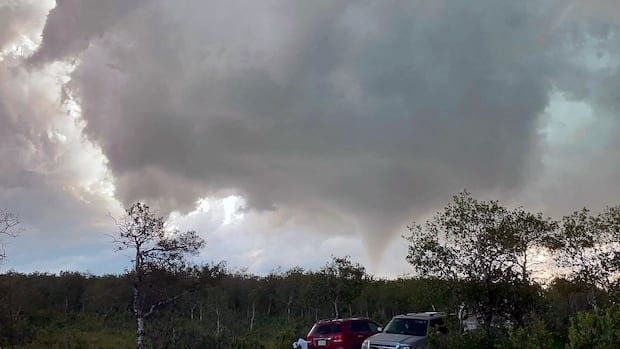
A recent CBC report highlights how tornado forecasting has evolved from the 1980s to today, driven by advances in computer modelling and Doppler radar technology. While historical accounts describe a much more limited ability to anticipate twisters, current meteorology relies on sophisticated data and rapid communications to warn communities.
The narrative contrasts past methods with contemporary practices. In earlier decades, forecasts were hampered by sparse observational networks and less powerful computing, making timely tornado warnings infrequent and less precise. By contrast, present forecasting teams routinely deploy computer models that simulate storm dynamics and track atmospheric conditions in near real time. Doppler radar provides detailed images of storm structure, enabling meteorologists to detect features associated with tornado formation, such as rotating mesocyclones and wind shear, with greater confidence.
The shift has practical implications for public safety. Enhanced detection and lead time allow emergency managers to issue warnings more quickly, directing residents to seek shelter and enabling schools and businesses to execute protective plans. Authorities also rely on a combination of radar data, satellite information, and weather models to assess risk for specific locales, including urban areas and rural communities that are vulnerable to tornado events.
The report notes an ongoing focus on improving prediction accuracy and warning reliability. Ongoing efforts include refining radar interpretation, expanding high-resolution modeling, and improving communication channels between weather agencies and the public. The objective remains to reduce false alarms while ensuring that genuine threats are conveyed promptly to affected populations.
While the article centers on technological progress, it also underscores the human element in forecasting—the need for skilled meteorologists to interpret complex data and translate it into actionable guidance for communities facing severe weather. A recent incident at Dillberry Lake Provincial Park in Alberta, where a tornado caused injuries, is cited as a reminder of the real-world consequences of severe storms and the importance of timely alerts.
In summary, tornado forecasting has transformed from limited instrumentation in the late 20th century to a data-driven, real-time system that leverages computer models and Doppler radar to improve warning accuracy and public safety.