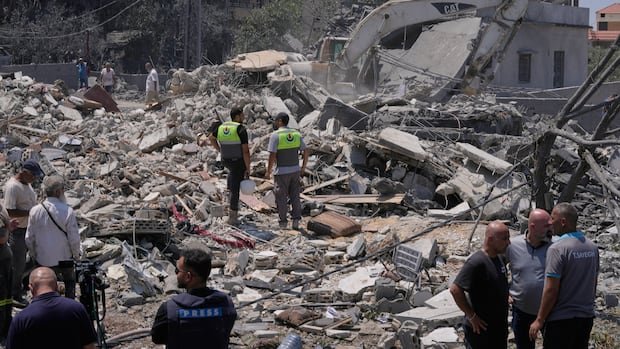
The Health Ministry in Lebanon confirmed the death toll, with rescuers continuing to comb through rubble for victims and possible survivors. Emergency crews faced difficult conditions as they worked in multiple sites across the southern districts, where homes and infrastructure were damaged or destroyed. Photos and footage circulating after the strikes showed rescue workers at the scenes of collapsed buildings, and residents pulling belongings from the debris.
Initial statements from Lebanese security officials suggested that the strikes targeted near-border areas that have repeatedly been the focus of cross-border hostilities since the escalation earlier this year. The Lebanese army and allied security services said the airstrikes caused casualties in several villages, though they did not immediately provide a complete casualty count.
Israel has yet to publicly claim responsibility for the attacks or offer details on the operation. The Israeli government has publicly stated it views Hezbollah as a destabilizing force along the frontier and has warned of potential punitive actions should cross-border attacks continue. Hezbollah, for its part, has warned of retaliation in response to any Israeli strikes.
Residents in the affected communities expressed fear over a possible expansion of the fighting along the Lebanon-Israel border. Local officials emphasized the need for medical assistance, emergency shelter, and aid distributions for those displaced by the strikes.
International observers and neighboring governments have urged restraint and called for de-escalation to prevent a broader confrontation. The current cease-fire agreement, reached in June to reduce cross-border hostilities, remains fragile, and analysts warn that renewed violence could threaten regional stability if it escalates further. The situation on the ground remained uncertain as teams continued to assess damage and casualty figures.