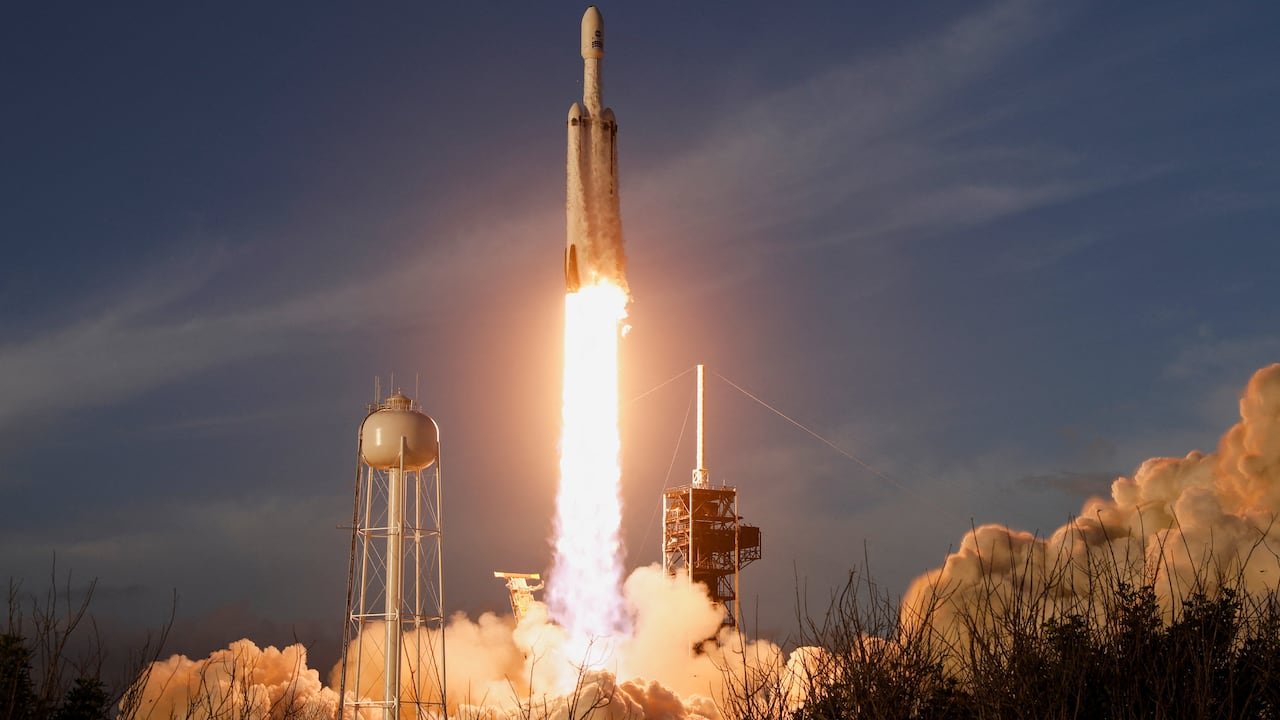
NASA launched a new flagship astronomical observatory Sunday, lifting off from Kennedy Space Center in Cape Canaveral, Florida. The mission centers on a repurposed spy satellite now serving as the Nancy Grace Roman Space Telescope, aimed at delivering panoramic views of the universe and pushing forward astrophysics and cosmology research.
The launch marks the start of a quest to probe some of the field’s biggest mysteries, with the telescope designated as a centerpiece of NASA’s current astronomy program. The blastoff used a SpaceX Falcon Heavy rocket, carrying the telescope into space as part of the agency’s broader effort to expand observational capabilities beyond conventional ground-based and prior space-based instruments.
Upon deployment, the Roman Space Telescope is expected to provide wide-field imagery intended to aid studies in multiple areas of cosmology, including the distribution of dark matter and the behavior of dark energy, according to NASA’s mission description. The observatory’s design focuses on capturing detailed, expansive views of distant galaxies and other cosmic phenomena, enabling researchers to test theories about the evolution of the universe.
Officials described the mission as a major upgrade in observational power, promising sharper measurements and broader surveys than previously available to scientists. The launch event drew attention to the telescope’s potential to reveal new data about the structure of the cosmos and the history of astronomical objects across vast distances.
Further details about the mission’s timeline, operational plans, and initial research targets were not provided in the initial report, but observers expect the Roman Space Telescope to begin its scientific operations after a series of post-launch checks and calibrations. The official launch date, distances, and specific instruments are expected to contribute to a multi-year program aimed at addressing long-standing questions in astrophysics and cosmology.