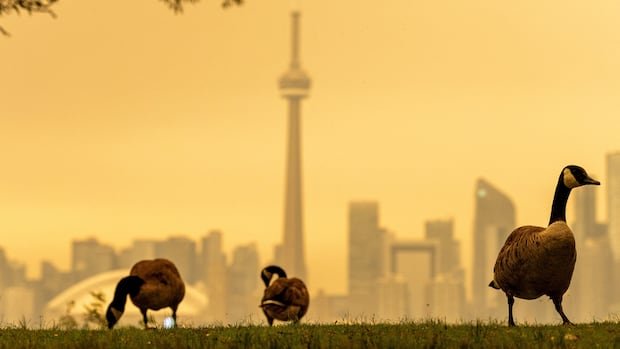
The lawmakers say the scale and persistence of wildfires have led to deteriorating air quality across regions that include northern U.S. states and central Canada, prompting health warnings and shifting public activity guidelines. They contend that federal and provincial authorities should have stronger prevention and mitigation measures in place to reduce wildfire ignition risks and to manage smoke intrusion more effectively.
Officials described the situation as a cross-border public health concern, noting that residents in affected areas have faced smoky skies, higher pollutant levels, and guidance to limit outdoor activity and protect vulnerable populations. The report highlights that smoke from wildfires in northwestern Ontario has contributed to the visible haze and air-quality advisories in nearby regions, compounding the challenges posed by an intense heat wave.
On the Canadian side, authorities have been issuing health advisories and urging precautions for residents, including staying indoors when air quality deteriorates and using protective measures to reduce exposure. Environmental and emergency management agencies have been monitoring wildfire activity and smoke dispersion, with officials emphasizing the importance of preparedness and rapid response.
The Republican members of Congress cited the cross-border impact as a rationale for stricter domestic measures and pointed to Canada’s wildfire response as a factor in the ongoing air-quality issues reaching U.S. communities. They indicated that additional steps at the federal and provincial levels are necessary to prevent or at least mitigate future smoke events and the associated health risks.
Environmental officials from both countries have stressed the need for ongoing coordination, enhanced surveillance of wildfire activity, and transparent communication about air-quality conditions. The situation remains dynamic as weather patterns influence fire behavior and smoke transport, with authorities reiterating public health guidance for individuals in affected areas.