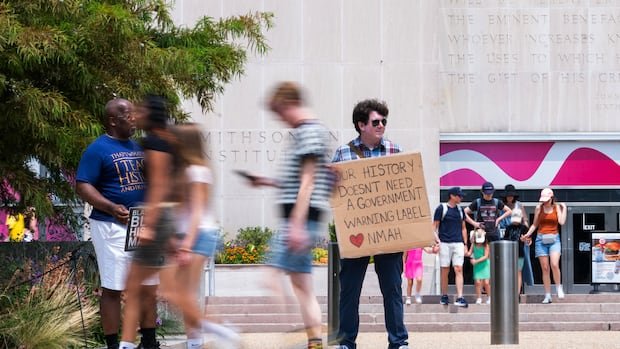
Photographs captured outside the museum show protesters holding signs, illustrating public reaction to the administration’s apparent initiative. The Associated Press reported the scene as part of ongoing coverage of how political influence intersects with museum programming and exhibit planning. While details of the proposals behind the signs have not been fully disclosed, discussions reportedly center on the way historical events, figures, and themes are framed for visitors.
Advocates for the administration’s approach argue that memory and history can be clarified to reflect traditional American values and a more cohesive national narrative. Critics counter that such efforts amount to political meddling in scholarly and curatorial decisions, potentially narrowing the scope of diverse perspectives that museums historically strive to present.
The National Museum of American History, part of the Smithsonian Institution, is widely viewed as a premier public history venue. Smithsonian officials have traditionally emphasized scholarly independence and a commitment to presenting a broad range of viewpoints. They have, however, faced increased scrutiny from political actors who view cultural institutions as battlegrounds for contested interpretations of the nation’s past.
Observers say the current moment signals a broader national debate about how history should be taught and memorialized in public spaces, including whether exhibits should foreground certain events or eras over others or adjust the framing of established narratives to reflect contemporary sensibilities.
Representatives for the Smithsonian and the Trump administration did not provide further details or comment on the signs or related proposals. As the conversation continues, the museum and its affiliates are expected to handle inquiries from lawmakers, scholars, and the public while ensuring that curatorial practices remain guided by research, evidence, and openness to diverse historical interpretations.