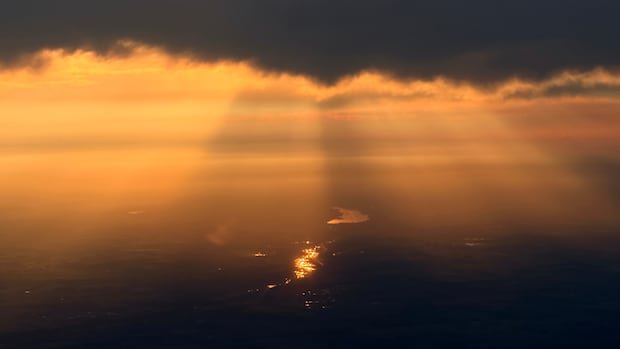
Recent reporting notes that smoke from extensive fires in Canada and the United States has traveled far enough to affect air quality in regions well outside the immediate fire zones. In some cases, warnings have been issued for cities far from active blazes, underscoring how airborne pollutants from wildfires can disperse across large distances depending on weather patterns.
Experts cited in the coverage explain the mechanics of smoke dispersion, including how wind direction, atmospheric stability, and temperature inversions influence how far and how quickly particulate matter travels. They also caution that while the seasonal smoke is not unprecedented, the sheer scale of current fires has intensified exposure for many communities and poses ongoing public health considerations.
The piece also touches on political rhetoric surrounding the issue. A notable exchange involved comments from former President Donald Trump, who criticized Canada over what he described as wildfire smoke “poisoning” U.S. air. The article accompanying the social media exchange clarifies that meteorological factors—not deliberate actions—drive the movement of smoke, and it emphasizes the scientific consensus that wildfire activity is contributing to worsened air quality in various cities.
Municipal and provincial authorities have continued to issue air quality advisories, advising residents to limit outdoor activity when pollution levels are elevated and to use protective measures for sensitive groups. Fire agencies are maintaining containment efforts, resource deployment, and coordination with neighboring jurisdictions as fires persist across the landscape.
Overall, the reporting reinforces that while cross-border smoke is a familiar seasonal occurrence, the ongoing escalation of wildfire activity is prompting renewed attention to preparedness, public health guidance, and climate-related risk management in both Canada and the United States.