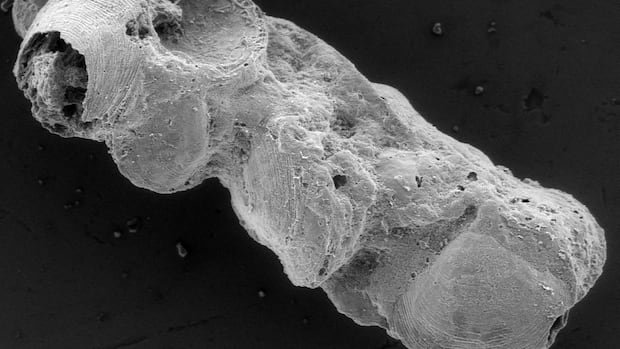
The findings indicate that coprolites contain chemical and microscopic clues about the diets of early animals, including the kinds of prey and plant matter consumed, as well as the environments in which these creatures lived. By linking fecal matter to specific trace fossils and sedimentary contexts, scientists aim to reconstruct food webs and nutrient cycles that would have supported a surge in biodiversity during this interval, often referred to as part of the Cambrian Explosion.
The research emphasizes that coprolites serve as indirect records of behavior and ecosystem structure, complementing other fossil evidence such as skeletal remains and trace fossils like burrows and feeding marks. The study suggests that the presence of fecal matter in marine sediments can reveal interactions among species, including predator–prey dynamics, scavenging, and decomposition processes that fueled nutrient availability.
Experts caution that interpreting coprolites requires careful analysis to distinguish the remains of various organisms and to account for diagenetic changes over hundreds of millions of years. However, when integrated with other fossil data, coprolite evidence can shed light on how early animal communities organized themselves and how nutrient recycling supported rapid ecological expansion.
The study was published in the journal Trends in Evolution and Ecology, with the authors noting that understanding ancient digestion and waste products offers a window into the ecological mechanics of Earth’s early marine ecosystems. The research adds to a growing body of work aiming to map the roots of modern biodiversity by tracing the biological and environmental interactions that occurred hundreds of millions of years ago.