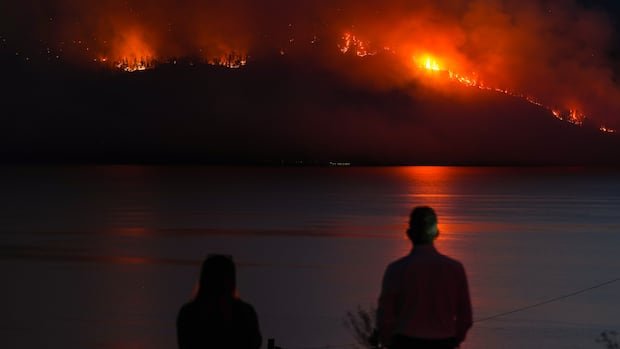
In the Okanagan Valley, authorities ordered thousands to leave in counties including Lake Country and Fintry, where plumes of smoke rose over hillsides and lakefronts. A CBC image accompanying the coverage showed onlookers watching from across Okanagan Lake as a wildfire burned on a mountainside near Fintry, highlighting the scale and proximity of the danger to homes and communities.
Emergency officials stressed that the situation could change quickly due to wind and dry conditions, urging residents to stay away from affected areas unless they have a designated evacuation route. The evacuations intersected with road closures and limited access in several corridors, complicating efforts to move people and supplies.
Multiple fires were reported to be within or near populated areas, forcing closures of parks and recreational spaces and creating air quality concerns for residents and travelers. Fire conditions were described as volatile, with authorities warning that even fires previously considered contained could reignite or intensify under current weather patterns.
Local governments, Indigenous communities, and provincial agencies activated evacuation orders and shelters to accommodate displaced residents. The government urged coordinated response efforts, including the delivery of temporary housing, essential services, and resources for those who had to abandon homes on short notice.
As crews battled the blazes, residents expressed concern for their properties and livelihoods, while some said they were returning to assess damage in limited, safety-approved periods. Forecasters projected a continuation of hot, dry weather with the potential for further fire growth in several regions, prompting continued vigilance from emergency management officials.
Officials did not immediately specify a total number of active fires or the exact number of evacuations, but stressed that the priority remained safeguarding lives and providing timely information to the public as the situation evolves.