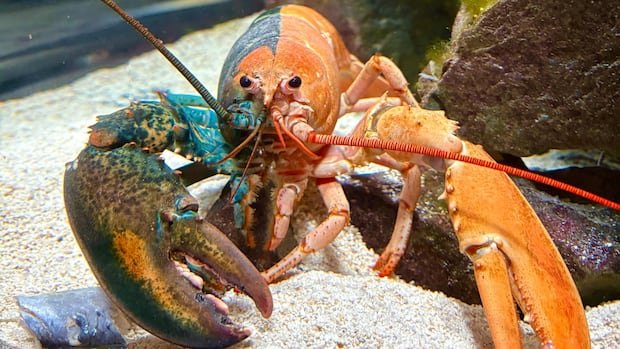
Robert Wagner, a veteran lobster fisherman from Lunenburg County, recounted his surprise upon spotting the specimen. The lobster’s shell is split down the middle, with one half exhibiting a blue hue and the other a vivid orange. Wagner said the appearance was so striking that he initially couldn’t believe his eyes.
Experts at the Beaty Centre confirmed the unusual coloration and noted that such a specimen is extremely rare. The centre, which operates within Dalhousie University, specializes in marine biodiversity and houses specimens for education and research. Oscar’s arrival provides researchers with an opportunity to study pigmentation and development in lobsters, while offering visitors a chance to observe a striking example of natural variation.
The donation aligns with the centre’s mission to showcase remarkable wildlife and to promote understanding of marine ecosystems. Centre officials emphasized that Oscar is now part of the institution’s living collection and will be accessible for observation and study as part of ongoing outreach and educational programs.
While the precise genetic or environmental factors behind Oscar’s two-tone coloration remain a topic for scientific inquiry, experts stressed that such anomalies are exceedingly uncommon in the wild. The sighting has drawn attention from the local community and visitors to Dalhousie University’s campus, where the Beaty Centre resides.
Authorities and researchers say Oscar’s presence underscores the broader importance of documenting unusual wildlife and supporting institutions that maintain living specimens for education and research. The lobster’s story continues to unfold as researchers monitor its health and behavior alongside other members of the centre’s diverse collection.