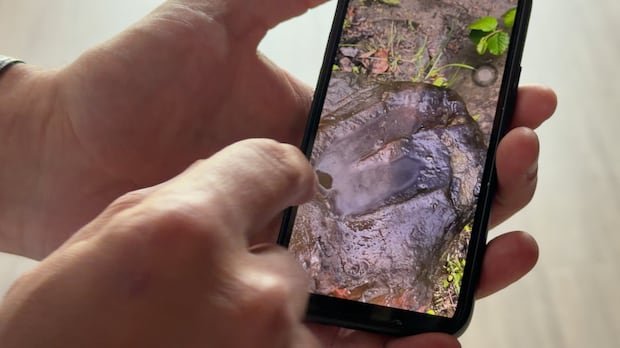
The incident began when Chih-yu Hsiao, visiting Bergeron Falls with a friend, photographed what he believed was an unusual footprint on a mud-filled surface along the trail. The image, later analyzed by experts, revealed a fossilized track from a dinosaur that roamed what is now Tumbler Ridge, a community in northern British Columbia known for its rich geologic history.
Tumbler Ridge is one of five UNESCO Global Geoparks in Canada, a designation that highlights areas with significant geological heritage and ongoing educational and conservation initiatives. The geopark status has helped attract international visitors who come to understand the region’s prehistoric past through guided tours, interpretive exhibits, and research collaborations with scientists.
Local paleontologists confirmed that the footprint captured in Hsiao’s photograph belonged to a dinosaur track dating back approximately 100 million years. The discovery adds to the region’s portfolio of ancient traces, which have drawn researchers and travelers alike to the area’s rugged terrain and fossil-bearing formations.
Officials emphasized that the finding underscores the role of public engagement in paleontology. Visitors who encounter potential fossils are advised to avoid disturbing the site and to report notable discoveries to local authorities or park administrators to ensure proper documentation and preservation.
Tumbler Ridge’s UNESCO Geopark framework continues to promote exploration of the area’s prehistoric landscape while balancing conservation needs with tourism. Community leaders said the geopark helps illuminate the region’s long-running fossil narratives and supports educational outreach that reaches beyond Canada’s borders.
The episode serves as a reminder of how a simple roadside detour can yield a significant addition to the record of prehistoric life, and how international visitors can become part of Canada’s ongoing journey to understand Earth’s distant past.