The looming labor dispute centers on the expiry of the collective agreement covering WestJet’s flight attendants at the end of 2025. With negotiations continuing, workers are eyeing a possible strike if they determine a collective voice supports job action. The timing under consideration would align with the August long weekend, a period typically characterized by increased travel demand.
WestJet, Canada’s second-largest airline by market share, has faced ongoing talks with its flight attendants’ union regarding issues commonly tied to compensation, scheduling, and working conditions. While the current status of the negotiations is not detailed in the report, the possibility of a strike vote signals a critical juncture in the bargaining process.
Labor actions in the airline sector can significantly affect summer travel plans, given the heightened travel volume during long weekends. If workers authorize a strike, the specific date for potential job action would be triggered only if negotiations fail to produce a new agreement or an interim settlement that both sides accept.
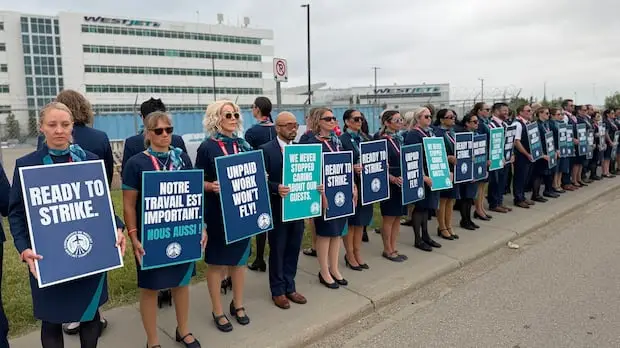
Photos accompanying the coverage show flight attendants marching in front of WestJet’s Calgary head office, many wearing blue and teal uniforms and holding signs indicating readiness to strike and opposition to unpaid work. The visual underscores the sense of urgency and mobilization among workers as they pursue concessions from the airline.
Industry analysts note that labor negotiations in Canada’s airline sector often involve a mix of wage increases, benefits, scheduling fairness, crew rest, and recruitment and retention strategies. A successful strike vote would not automatically halt operations; airlines typically negotiate for essential services and may implement contingency plans. However, a broad strike vote could lead to disruptions if a work stoppage occurs.
WestJet has not yet disclosed a formal response to the strike vote process or the progress of ongoing wage and benefit discussions. Representatives for the carrier have historically emphasized a commitment to safety, reliability, and service, while stressing the importance of reaching a fair agreement with employees.
Travelers planning trips for the August long weekend should monitor updated advisories and potential travel disruptions as the bargaining period unfolds. Industry observers suggest that both sides may use the negotiation window to seek leverage, with the possibility of interim agreements or binding arbitration as a pathway to avoid disruption.
The situation highlights broader tensions in Canada’s aviation labor market, where unions have previously leveraged authorized strikes as a tool to press for better terms. For now, the 4,400-plus WestJet flight attendants remain in a position to cast ballots on whether to authorize industrial action, with the outcome dependent on the results of collective bargaining discussions in the coming weeks.