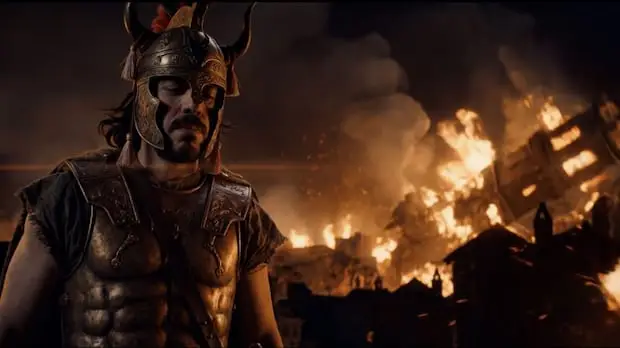
The new production, created without human actors or traditional on-set performances, reimagines the ancient epic through advanced AI systems. Audiences are introduced to a narrative built entirely on machine-generated voices, visuals, and sound design, raising questions about authorship, originality, and the future role of human creators in cinema.
Industry observers note that the project is a bold extension of earlier experiments with AI in film, including a separate but related effort that featured an entirely AI-generated performance by a well-known actor. In this latest venture, the Odyssey tale is reinterpreted through the lens of machine learning models designed to render character, tone, and atmosphere without direct human performance input. The result is a feature-length piece that aims to evoke the familiar voyage and trials of Odysseus, while presenting them through algorithmic abstraction rather than traditional acting.
Critics who attended Tribeca described the film as visually arresting and conceptually provocative, though they underscored that the production’s reliance on AI prompts raises ongoing discussions about fidelity to source material and the ethical considerations of AI in creative work. Some reviewers noted a sense of distance in the storytelling, attributing it to the absence of human performance and the onscreen immediacy that live actors typically provide. Others argued that the project challenges conventional categories of film, literature, and digital art, inviting audiences to rethink how ancient narratives can be experienced in the digital age.
The Odyssey project joins a broader roster of AI-centered cinema and media experiments that have accelerated in recent years as technologies mature. Proponents emphasize the potential for new interpretive angles, cost efficiencies, and the ability to generate multiple stylistic approaches within a single framework. Detractors, however, warn of risks including possible misrepresentation of classic texts, the loss of nuanced interpretation that human storytelling offers, and concerns over authorship rights and compensation for creators who contributed to AI training data.
Producers behind the new AI Odyssey highlight that the work is less about replacing traditional filmmaking and more about exploring what is possible when algorithms play a central role in narrative construction. They point to the iterative nature of AI-generated content, which can be refined or reimagined in ways that human-guided processes cannot easily replicate. The creators also emphasize that the project is intended to provoke debate about the boundaries between adaptation and autonomous machine creation.
While the reception among mainstream audiences remains to be seen, the project has already sparked conversations about the future of cinematic adaptation, the enduring appeal of Homer’s Odyssey, and how advancing AI technologies might reshape the way stories are told on screen. As festivals and platforms continue to showcase AI-driven work, industry watchers will be watching closely to see how audiences respond to these experiments and what they imply for the broader landscape of film and storytelling in the years ahead.